
Why It Matters for Your Career in Data
Data roles are booming across industries, from tech startups to finance to healthcare. As more companies become data-driven, there's a massive demand for professionals who can work with data.
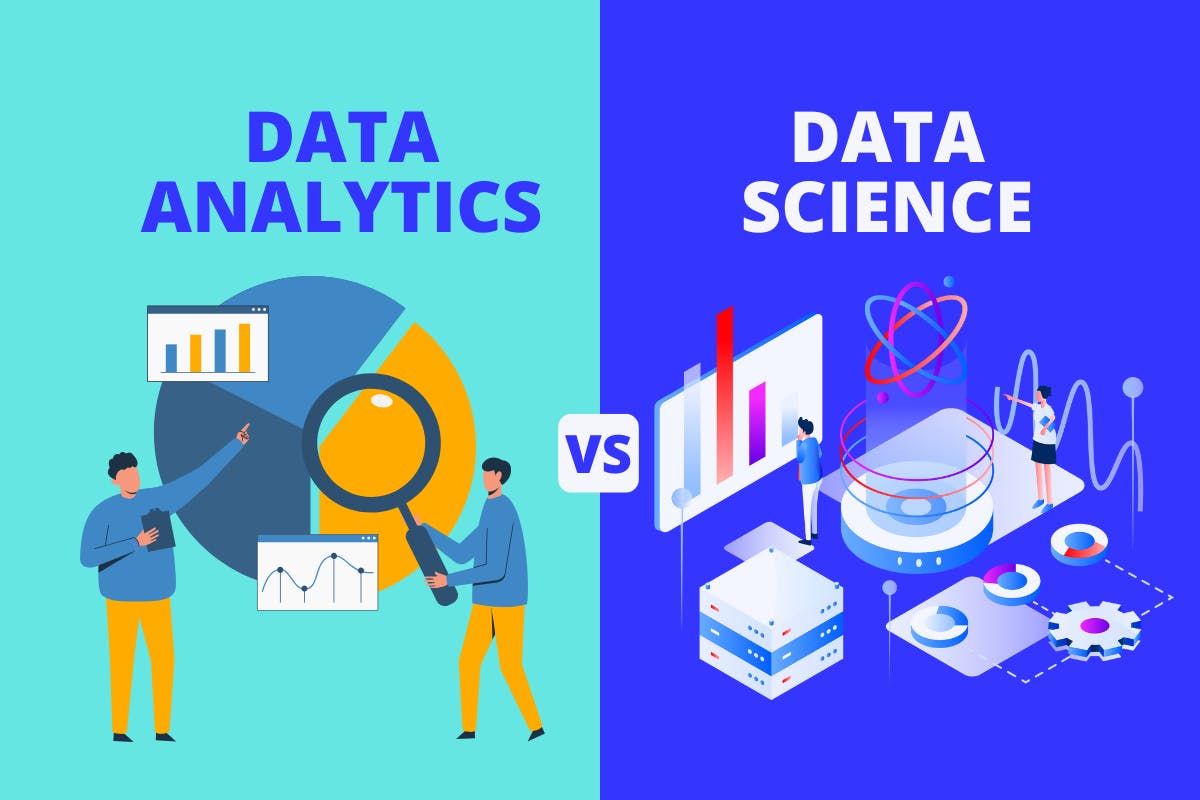
But here’s the catch: while “data analytics” and “data science” are often used interchangeably, they’re not the same thing. And if you’re thinking about joining a bootcamp or switching careers, understanding the real difference can help you make the right decision for your goals.
What Is Data Analytics?
The Role of a Data Analyst
Data analysts are problem solvers. They work with structured data to answer specific business questions like:
- How did our sales perform last quarter?
- Which customer segments are most active?
- What’s causing churn in our user base?
In short, data analytics is about understanding the past to guide present decisions.
Typical Tasks of a Data Analyst
- Collecting and cleaning raw data
- Analyzing data for trends, patterns, and insights
- Creating dashboards and reports
- Presenting insights to business stakeholders
Skills and Tools Used in Data Analytics
- SQL for querying databases
- BI tools like Tableau, Power BI, QlikView
- Excel for quick exploration
- Python or R (optional, for advanced analysis)
- Strong communication and data storytelling skills
What Is Data Science?
The Role of a Data Scientist
Data scientists go a level deeper. While analysts explain what’s already happened, data scientists build models to predict what’s likely to happen next. They also explore messy, unstructured data to ask better questions and find hidden insights.
Typical Tasks of a Data Scientist
- Designing machine learning models
- Building data pipelines and automation tools
- Experimenting with hypotheses
- Solving undefined, open-ended problems
- Working with structured and unstructured data
Skills and Tools Used in Data Science
- Programming: Python, R, Java, or Scala
- Machine learning & AI: scikit-learn, TensorFlow, PyTorch
- Big data platforms: Spark, Hadoop
- Advanced math & statistics
- Strong domain knowledge and business understanding
Data Analytics vs. Data Science: Key Differences
Feature | Data Analytics | Data Science |
Main Goal | Explain what happened | Predict what will happen |
Approach | Descriptive, diagnostic | Predictive, prescriptive |
Data Type | Structured | Structured + Unstructured |
Common Tasks | Reporting, dashboards, KPIs | Modeling, experimentation, and automation |
Tools | SQL, Excel, Tableau, Power BI | Python, R, ML libraries, big data platforms |
Skill Level | Entry to mid-level | Mid to senior level |
Learning Path | Bootcamps, certificates, bachelor’s degree | Bootcamp + advanced coursework or master’s |
Career Progression | Business Intelligence, Data Analyst | Data Scientist, ML Engineer, Data Engineer |
Career Paths: Which Is Right for You?
Education and Learning Requirements
- Data Analysts: Often enter the field with a bachelor’s degree in data-related fields or a bootcamp certificate.
- Data Scientists: Usually have more advanced academic backgrounds, often with a master’s degree in data science, computer science, or a related discipline.
That said, many data scientists start as data analysts, then grow into the role by learning advanced skills like machine learning and AI.
Career Growth and Opportunities
- Data Analysts often move into senior analyst roles, business intelligence, or even data science with experience.
- Data Scientists have a broader range of career options, including data engineering, machine learning engineering, or AI product development.
Learn the Right Skills with Sigma School
Whether you're drawn to solving business problems with data or building intelligent systems that learn and adapt, the first step is mastering the fundamentals.
At Sigma School, our Data Analytics Bootcamp is built for beginners and career switchers. You’ll learn:
- How to work with real-world data
- SQL, data visualization, and analytics tools
- Basic Python for data analysis
- How to present insights that drive decisions
And if you're curious about data science? This bootcamp lays the perfect foundation to grow into more advanced roles.
Ready to kickstart your data career?
Explore Sigma School’s Data Analytics Bootcamp and take your first step into the world of high-impact, in-demand data careers.